

When looking for pallets there is a common terminology confusion: sunta (chipboard) pallet, composite pallet, presswood pallet, and sometimes MDF pallet. Are these the same or different? Short answer: sunta, presswood and composite pallet are different names for the same product; MDF and plywood are different wood derivatives. This article clarifies the terms and explains which is right for pallets.
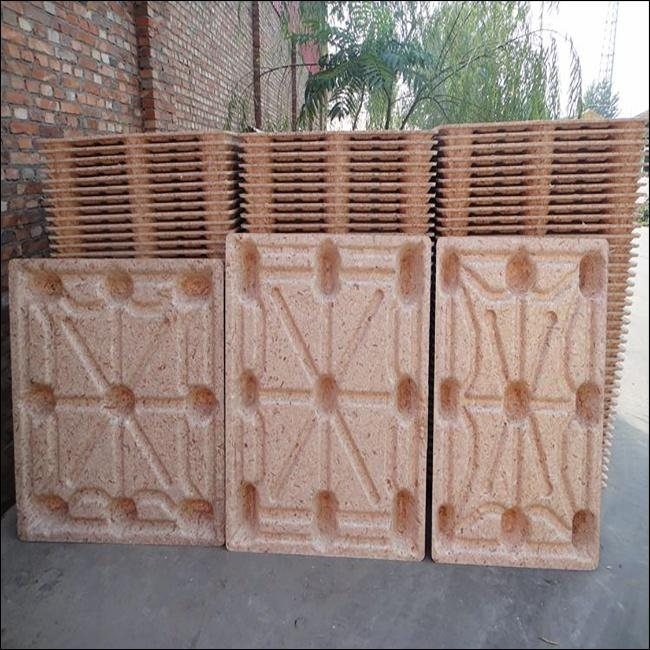
Is a sunta pallet the same as a composite pallet?
Yes, they are the same. "Sunta" colloquially means chipboard (a panel made by pressing wood chips). In the pallet world, sunta pallet, presswood pallet, compressed pallet and composite pallet all describe the same pallet, made by pressing wood fibre with resin in one piece under high heat and pressure. There is no product difference — only a naming difference.
Chipboard (sunta) vs MDF
MDF (medium-density fibreboard) and chipboard (sunta) have different production processes. Chipboard is made by pressing coarser wood chips; MDF is made by pressing very fine wood fibres more densely. MDF is smoother but heavier and less moisture-resistant. The composite structure used in pallets is, unlike MDF, a special pressing recipe designed for load bearing and moisture resistance; it should not be confused with the MDF board used in furniture.
Difference from plywood
Plywood is made by cross-gluing thin wood veneer layers; it is not fibre/chip-based like chipboard and MDF. Plywood is high-strength but expensive and not common for pallets. The composite (sunta) pallet offers sufficient strength and light weight without the cost of plywood.
Summary: which is right for pallets?
| Term | What it means | For pallets |
|---|---|---|
| Sunta / Presswood / Composite pallet | Same product: pressed wood fibre | Ideal |
| MDF | Fine fibre, dense board (furniture) | Not suitable |
| Plywood | Cross-veneer layers | Costly / rare |
In short, the product you need — whether called sunta, presswood or composite — is the same pallet. For technical values, sizes and price, see our composite pallet page; for the material comparison, see our composite vs wood vs plastic article.