
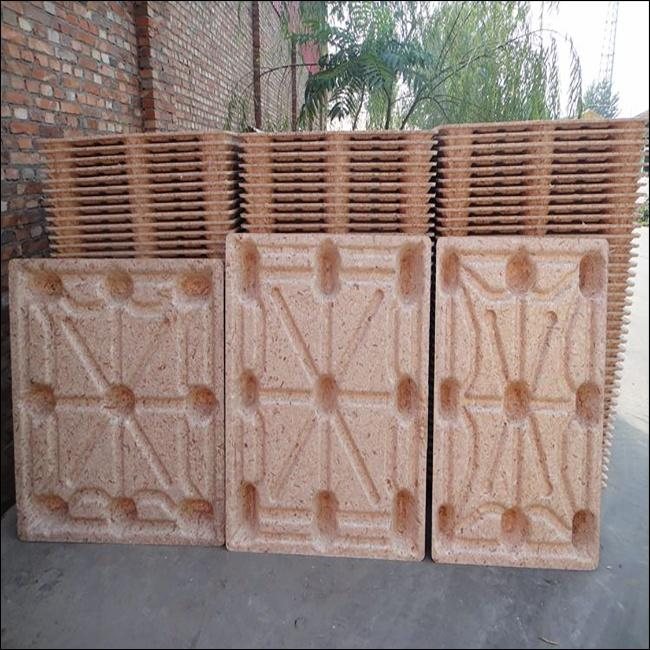
A composite pallet is a new-generation transport pallet produced by pressing recycled wood fibre together with an eco-friendly resin into a single piece under high temperature and pressure. In the industry it is also called a pressed-wood pallet, presswood pallet or sunta (chipboard) pallet. In this article we cover what a composite pallet is, how it is made, its advantages over wood and plastic, and the sizes it comes in. For product models, sizes and pricing, see our composite pallet page.
What is a composite pallet?
Classic wooden pallets are made by joining pieces of timber with nails or screws. A composite pallet contains no nails or screws: wood chips and fibres are blended with resin and pressed in a mould into a single piece. The result is a dimensionally very stable, splinter-free, smooth pallet that is identical from one unit to the next.
Thanks to this structure a composite pallet is unaffected by moisture, mould and insects, and its consistent dimensions let it run smoothly on automated warehouse and conveyor lines.
How is a composite pallet made?
The production process broadly consists of these stages:
- Raw material prep: Recycled wood chips and fibres are screened and dried.
- Resin blending: The wood fibre is mixed homogeneously with an eco-friendly binder resin (urea-formaldehyde).
- Hot pressing: The blend is loaded into a pallet mould and pressed in one shot under high temperature and pressure.
- Cooling and inspection: The pallet is cooled, checked for dimensions and load strength, then stacked.
The heat applied during pressing sterilises the wood, so the product is ready for export directly. You can find a visual summary of the production stages on our company page.
Composite, wood or plastic?
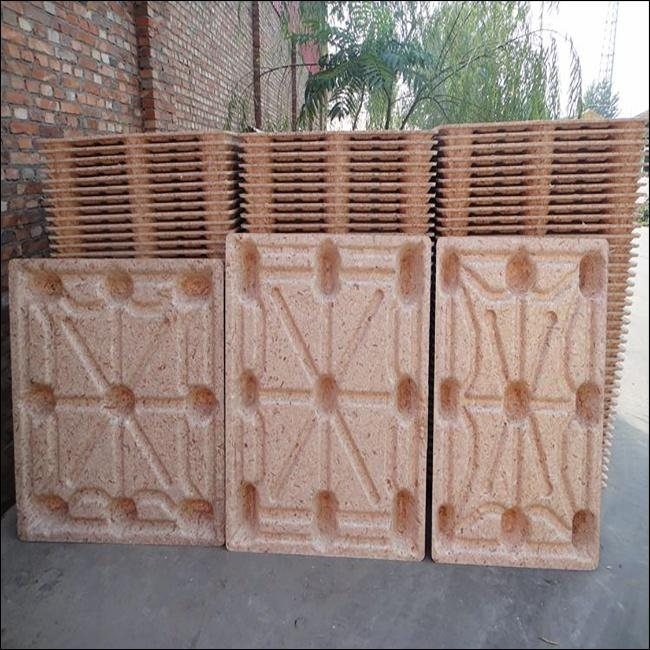
Each pallet type has its own use cases. Wooden pallets are cheap up front but heavy, splinter-prone and require ISPM-15 heat treatment for export. Plastic pallets are hygienic but costly with limited load capacity. Composite pallets combine the advantages of both: the cost balance of wood with the hygiene and dimensional stability of plastic.
For a detailed comparison table, see our Why Composite Pallets? page.
Advantages of composite pallets
- No ISPM-15 for export — thanks to the heat applied during pressing, no fumigation certificate is needed.
- Light yet strong — about 14–20 kg depending on size; noticeably lighter than a euro wooden pallet.
- Hygienic surface — splinter-free, nail-free and easy to clean; suitable for food and pharma logistics.
- Dimensional stability — does not swell with moisture and keeps its size; runs reliably on automation lines.
- Stackable — its nestable design saves space when shipping empties.
- 100% recyclable — can be reprocessed at end of life; environmentally friendly.
Composite pallet sizes and pricing
The most common size is the 80×120 cm (1200×800 mm, Euro) pallet. We also produce 100×120, 110×110, 114×114 and made-to-order sizes. Pricing is not fixed; it depends on size, base type, load capacity and order quantity. For models, a size gallery and a technical table, see our Composite Pallet product page.