
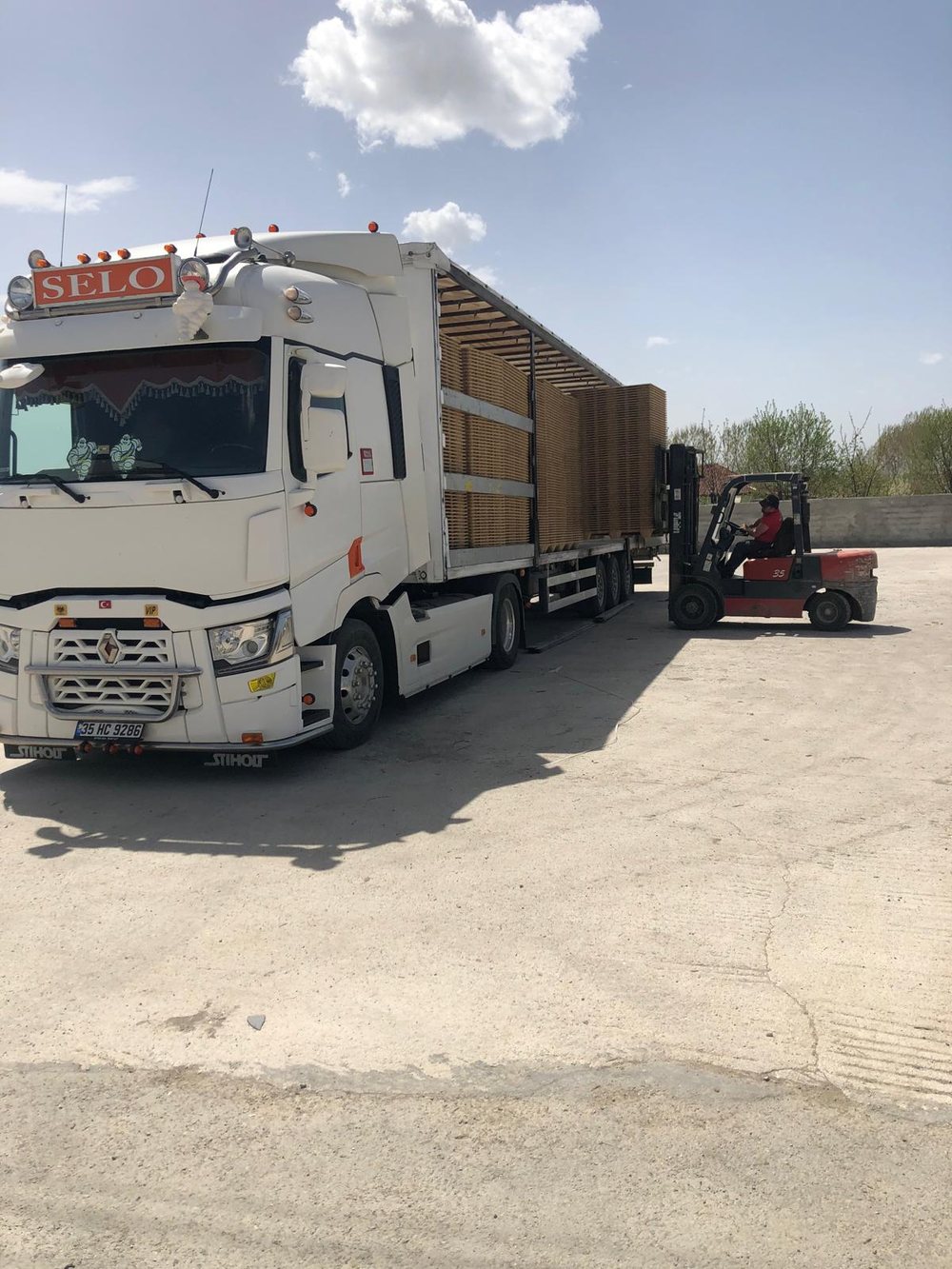
The most common question when choosing a pallet: composite, wood or plastic? All three have their uses; the right choice depends on your load, hygiene needs, export situation and total cost. In this article we compare the three pallet types on clear criteria and summarise which suits which sector.
Composite vs wood vs plastic comparison table
| Criterion | Composite | Wood | Plastic |
|---|---|---|---|
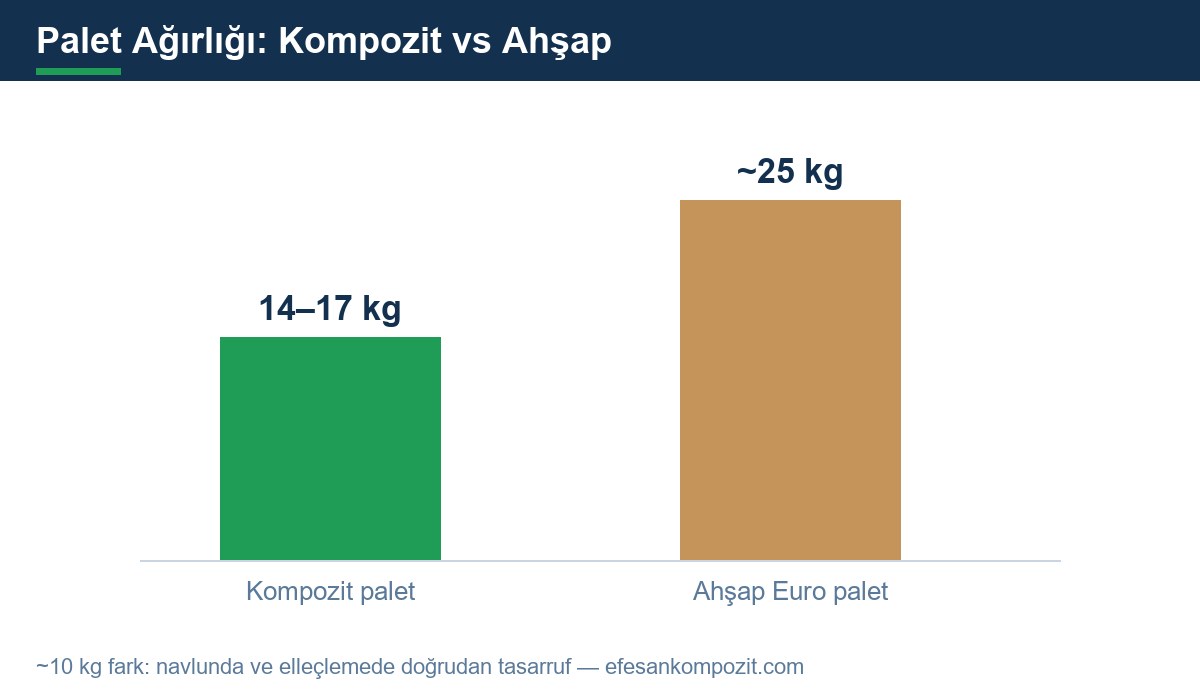
| Weight | Light (~14–20 kg) | Heavy (~25 kg) | Medium |
| Export (ISPM-15) | Not required | Required | Not required |
| Hygiene | High | Low | Very high |
| Moisture / rot resistance | High | Low | High |
| Dimensional stability | High | Variable | High |
| Up-front cost | Medium | Low | High |
| Total cost (long term) | Low | Medium–high | Low |
| Recyclability | %100 | Partial | High |
* General tendencies; actual performance varies by model, size and usage conditions.
Wooden pallets: pros and cons
Wooden pallets are the most common and cheapest up front; they are repairable and available everywhere. But they are heavy, absorb moisture and rot, and harbour splinters and protruding nails; export requires ISPM-15 heat treatment or fumigation. Short life and processing costs raise the total cost.
Plastic pallets: pros and cons
Plastic pallets are very hygienic, washable and long-lasting; they need no ISPM-15. However, their up-front cost is high, they can flex under heavy loads and are usually not repairable. They are preferred in high-volume, closed-loop operations where hygiene is critical.
Composite pallets: the best of both
A composite (presswood) pallet combines the cost balance of wood with the hygiene and stability of plastic. It is light, resistant to moisture and insects, free of splinters and nails, and needs no ISPM-15 for export. It is 100% recyclable and long-lasting, so it stands out on total cost. For detail, see our Why Composite Pallets? page.
Which pallet suits which sector?
- Food, beverage, pharma: Hygiene-first → composite or plastic.
- Export and logistics: ISPM-15-free, light → composite.
- Heavy parts / automotive: Reinforced composite or wood.
- Low budget, internal use: Wood.
You can find the right choice for your sector in our pallet selection guide, and the export advantage on our export pallet page.