

The first question before buying a pallet is usually price; but "how much is a pallet?" has no single answer. Pallet price depends on many variables — material, size, load capacity, order quantity and use case. In this article we explain the 7 core factors that determine pallet price and why the label price can be misleading.
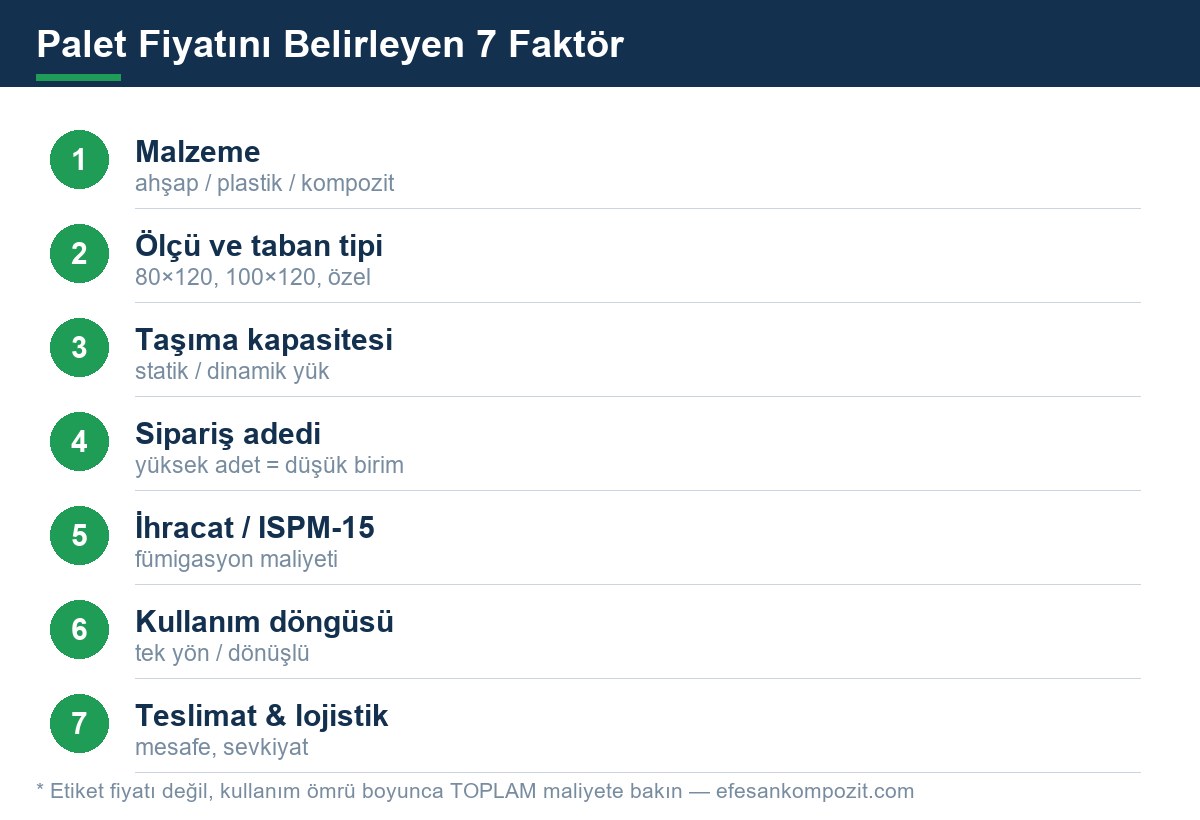
1) Material: wood, plastic, composite
The biggest price factor is material. Wooden pallets are cheapest up front; plastic is the most expensive. The composite pallet sits in between: slightly pricier than wood but cheaper than plastic. But the right comparison is total cost, not the up-front price (below).
2) Size and base type
The bigger the pallet, the more material and cost. 80×120 (Euro) is the standard; 100×120 and 120×120 need more material. Base type (full, open, runner) also affects price. The half pallet (60×80) is the most economical option.
3) Load capacity
A higher static and dynamic load requirement means a thicker, stronger base, which raises cost. Buying more capacity than you need is wasted cost; choosing the right capacity optimises price.
4) Order quantity
Economies of scale are decisive in pallet production. Unit cost drops noticeably for higher-volume orders. Companies buying regularly and in a planned way get far better pricing than one-off small purchases.
5) Export and ISPM-15: the hidden cost
A wooden pallet's label price looks low; but in export the ISPM-15 heat-treatment/fumigation fee, stamping and waiting time are added. The composite export pallet needs no ISPM-15, removing these hidden costs — often cheaper in total.
6) Use cycle: one-way or returnable?
For one-way (export) use, light weight and low unit cost matter. For closed-loop (returnable) use, durability and long life stand out; a pallet that costs a bit more but is reused many times lowers the cost per trip.
7) Delivery and logistics
Distance to the maker, shipping method and delivery quantity also reflect on price. For Ankara and its surroundings, buying from a local maker lowers freight cost.
Look at total cost, not the label price
The right comparison is not the label price but the total cost over the pallet's service life: up-front price + export processing + replacement frequency + freight. From this view, the composite pallet is more economical than wood in most scenarios. For the detail and a tailored quote, see our composite pallet prices page; for the material comparison, see Why Composite Pallets?.