
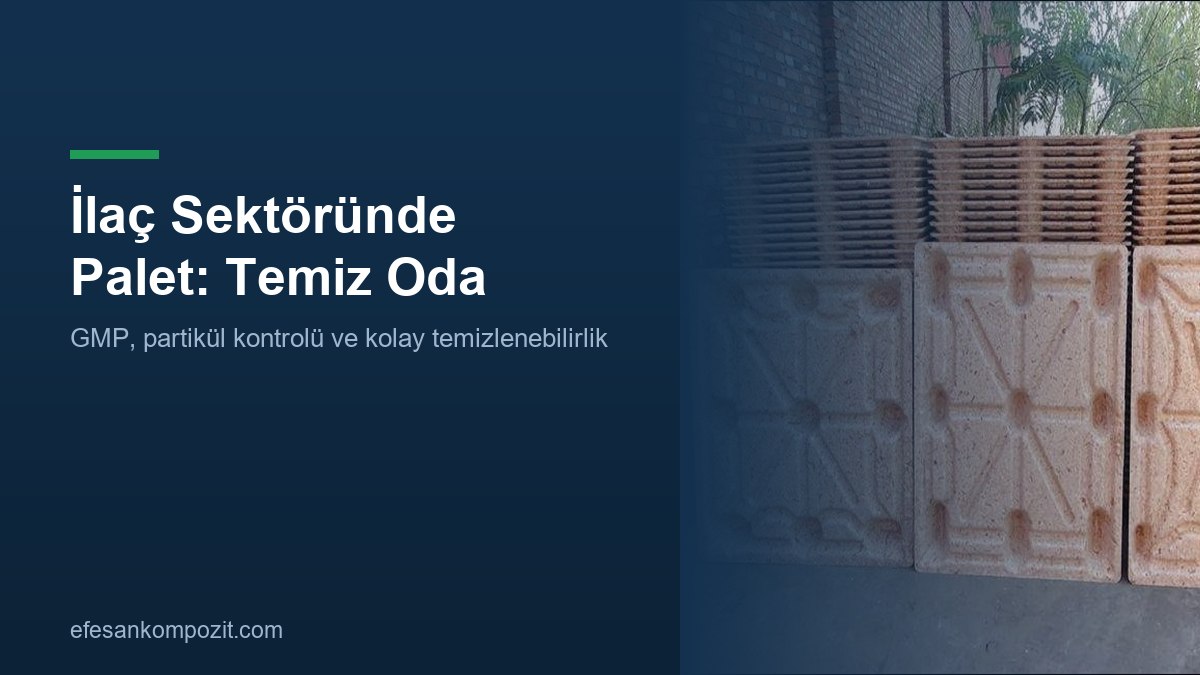
In pharma, cosmetics and medical manufacturing, even the smallest contamination puts the product and the patient at risk. So all handling equipment including pallets must meet cleanroom and GMP (Good Manufacturing Practice) expectations. This article explains why pallets are critical in pharma and which pallet suits cleanrooms and particle control.
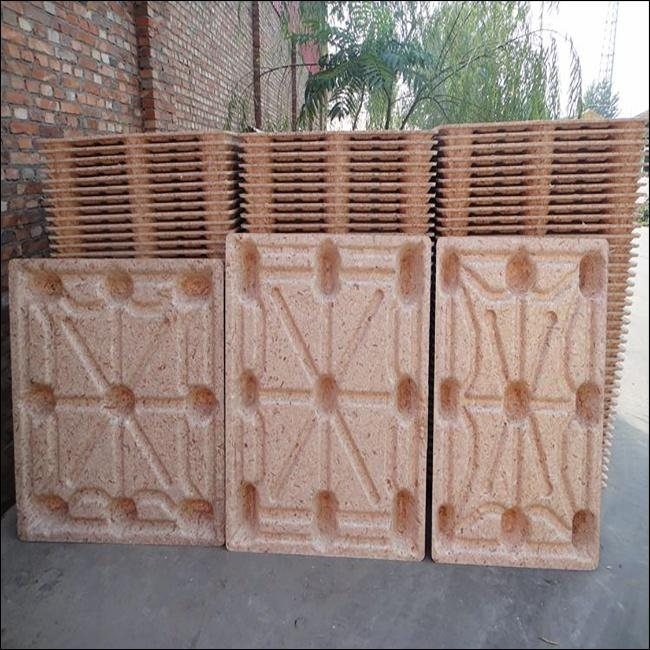
Cleanroom and GMP pallet expectations
GMP and cleanroom environments require dust, particle and microbiological contamination to be minimised. For a pallet, this means a low-particle, non-porous surface that can be wiped and disinfected easily and does not absorb moisture. A classic wooden pallet, with its dust, splinters, protruding nails and porous structure, is not suitable for these environments.
Advantages of composite pallets in pharma
- Low particle: the non-porous surface sheds no dust or fibre, protecting cleanroom air quality.
- Easy to clean / disinfect: the smooth surface is wiped and cleaned with suitable disinfectant.
- No splinters or nails: no foreign matter contaminates packaging or the sterile area.
- Dimensional stability: every pallet identical; runs consistently on automated, validated lines.
The same principle in chemicals and cosmetics
Chemicals and cosmetics manufacturing also require controlled environments and chemical resistance. The composite pallet resists moisture, many chemicals and temperature change; it does not rot or deform. For sector-specific detail, see our pharma pallet page.
Export and traceability
In pharma export, wooden pallets require ISPM-15; composite pallets do not. Consistent size and a clean surface also ease batch/lot traceability and automated reading systems. For size choice and a quote, see our composite pallet page.