
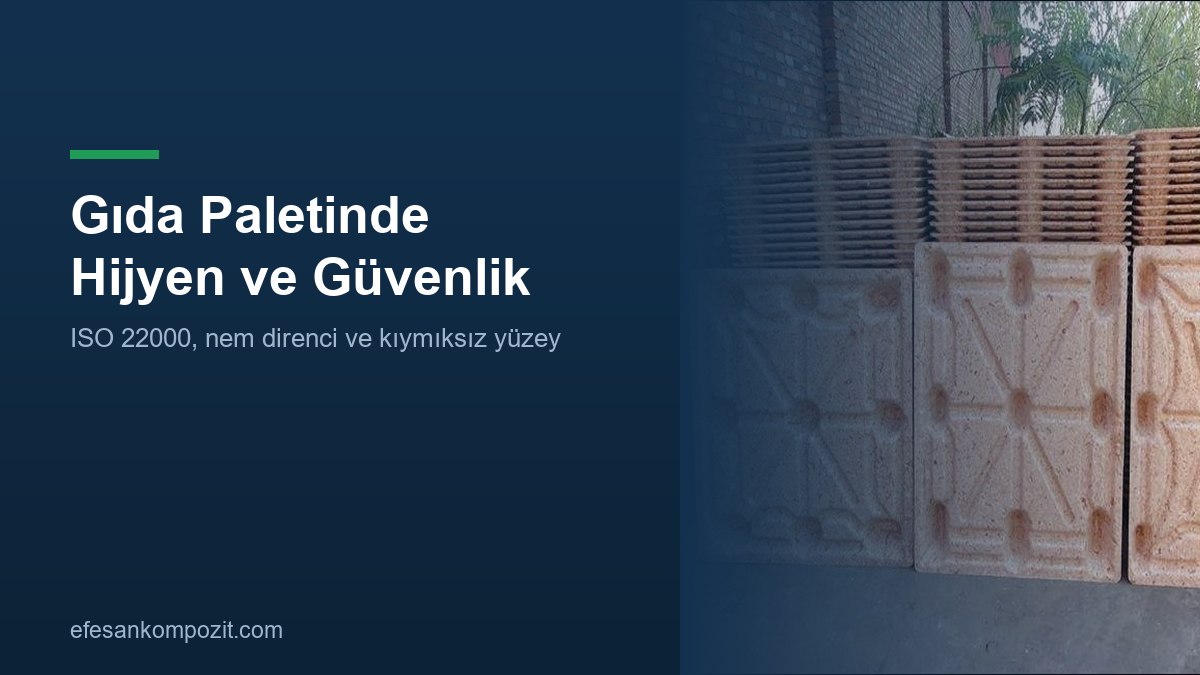
In the food supply chain the pallet is part of the surface in contact with product, so its hygiene directly affects food safety. Food-safety management systems like ISO 22000 expect packaging and handling equipment to be clean, traceable and free of contamination risk. This article explains why hygiene on a food pallet is critical and why the composite pallet is more suitable than wood.
ISO 22000 and pallets: what to watch for
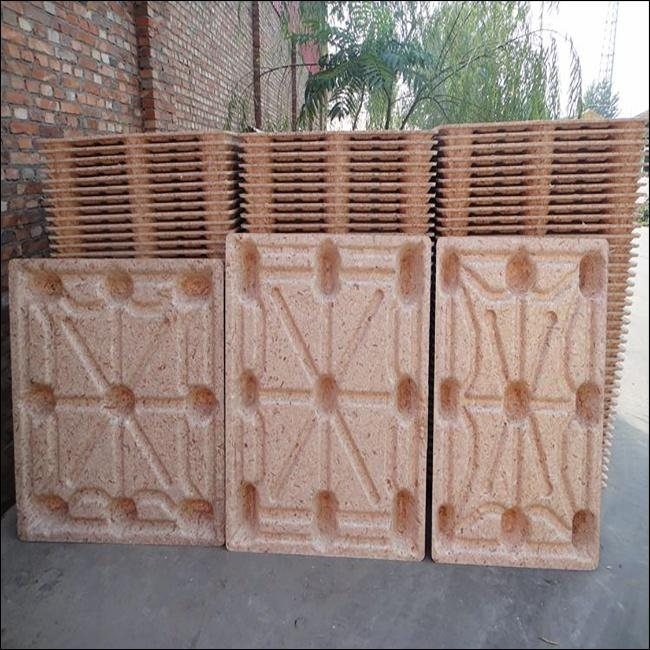
ISO 22000 aims to control contamination sources on the HACCP principle. Key pallet risks: moisture and mould, splinter/wood-chip contamination, protruding nails, a porous surface that cannot be cleaned, and pest harbouring. A classic wooden pallet carries most of these risks; a hygienic pallet must offer a smooth, non-absorbent, easy-to-clean surface.
The hygiene advantages of composite pallets
- Moisture and bacteria resistance: does not absorb water or spillage, hindering mould and bacteria growth.
- Splinter-free, nail-free surface: removes the risk of foreign-matter contamination to product and packaging.
- Easy to clean: the smooth, non-porous surface is cleaned by wiping/washing.
- Dimensional consistency: every pallet is identical; runs smoothly on automated, hygienic filling lines.
Cold chain and humid environments
Cold storage and humid production environments worsen mould and swelling in wooden pallets. Being moisture-resistant, the composite pallet keeps its size and hygiene in these environments, an advantage in food-safety audits. For sector-specific detail, see our food pallet page.
Food pallets in export
In food export, wooden pallets require ISPM-15 heat treatment; composite pallets do not. So you gain both hygiene and the ISPM-15-free export advantage together. For size choice and a quote, see our composite pallet page.