

Big bags (jumbo bags / FIBC) are large packages carrying 500–1500 kg of bulk product; common in chemicals, food ingredients, construction and agriculture. Safe handling of a big bag depends on the right pallet: the wrong size causes bag overhang, tipping and forklift-handling problems. This article covers the right pallet size, base type and why the composite pallet is advantageous for big bags.
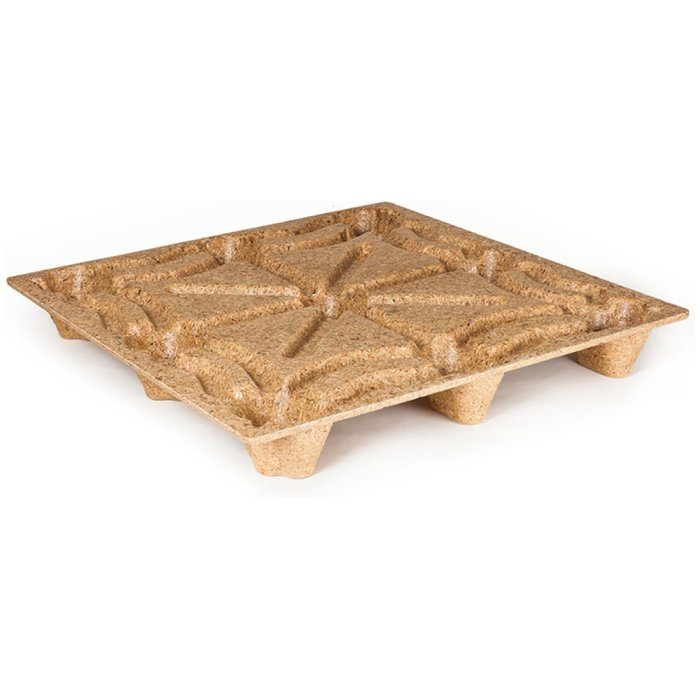
Which pallet size for big bags?
Standard big-bag base sizes are usually between 90×90 and 110×110 cm. So the best pallet is a wide size that supports the bag base without overhang: 100×120 cm (1200×1000 mm) and 120×120 cm (1200×1200 mm) are the most preferred sizes for big bags. The 80×120 Euro pallet can be used for narrow big bags but may cause overhang with wide ones.
Base type and entry direction
Because a big bag is heavy with a high centre of gravity, a pallet with 4-way forklift/pallet-truck entry is safe; the operator can lift the bag from any direction. A flat, full base supports the bag underside, reducing puncture and sag risk. The smooth, nail-free surface of a composite pallet does not damage the big-bag fabric — nails and splinters on a wooden pallet can tear the bag.
Load capacity: mind the weight
A full big bag can be 1000–1500 kg. At this load the pallet's static and dynamic capacity is critical; a reinforced base should be chosen as needed. Thanks to its dimensional stability, the composite pallet does not flex under heavy load and runs consistently on automated filling/packing lines.
Big-bag pallets in export
Big-bag products (granular chemicals, food ingredients, minerals) are often exported. Wooden pallets require ISPM-15 heat treatment in these shipments; composite pallets do not. So when your export pallet is composite, fumigation cost and customs delay disappear. For size choice and a quote, see our composite pallet page.