

One of the biggest hidden cost items in export is the empty container volume you pay to ship. A good container loading plan — with the right pallet size and stacking pattern — raises the container fill rate and lowers cost per pallet. This article covers the logic of load planning, the effect of pallet size and how to optimise cost.
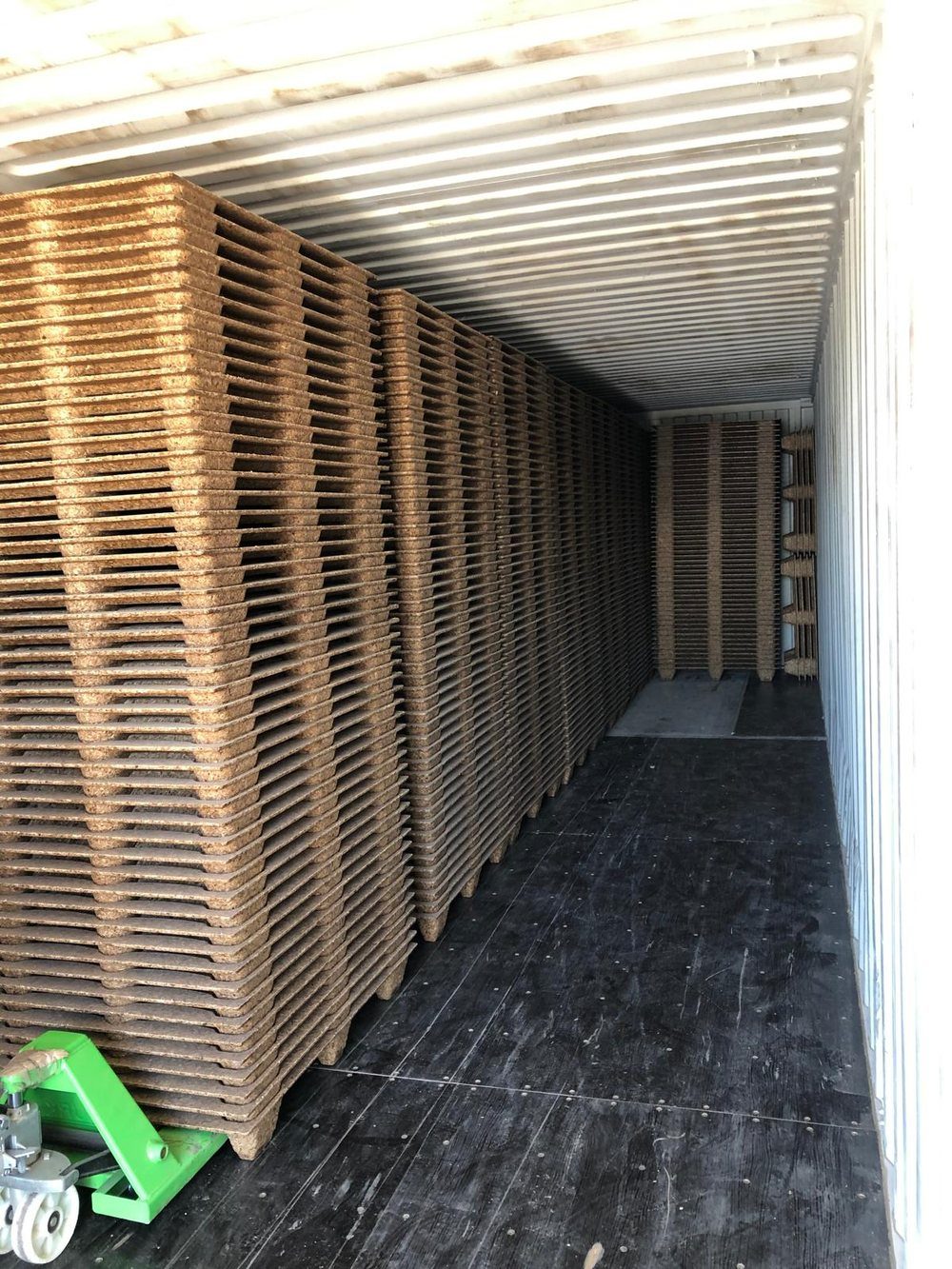
Why does the loading plan matter?
The freight for a container or truck is fixed; the more product you fit inside, the lower the unit (per-pallet/per-product) cost. A poor layout can leave 20–30% of the container empty, hitting profit directly. A loading plan evaluates pallet size, product height, weight distribution and stacking safety together.
How does pallet size affect container efficiency?
The container internal width is about 2.35 m. The 114×114 cm pallet fits two side by side across this width with minimal void; the 80×120 Euro pallet is optimised for European road and racking; the 120×120 cm pallet can be inefficient width-wise. The right size directly sets the number of pallets per container. Use our pallet loading calculator for your size, and see the composite pallet page for all sizes.
Lowering cost by stacking
If product and pallets are stackable, using the container height can halve the unit cost. The flat, dimensionally stable surface of a composite pallet enables safe stacking; unlike wood, it does not swell with moisture and lose balance. A 40’ HC (high-cube) container allows more stack layers thanks to its extra height.
Weight limit and the light-pallet advantage
A container also has a weight limit; you can hit the weight cap before the volume fills. Here the pallet's own weight matters: being about 10 kg lighter than wood, the composite pallet lets you carry more product within the same weight cap. And as an export pallet it needs no ISPM-15, so it incurs no processing cost.