

The automotive OEM and supply industry must move heavy, sensitive and high-volume parts flawlessly. So three things stand out in pallet choice: high load capacity, dimensional stability and compatibility with automation lines. This article covers the right pallet choice in automotive and the composite pallet's advantage in these three critical areas.
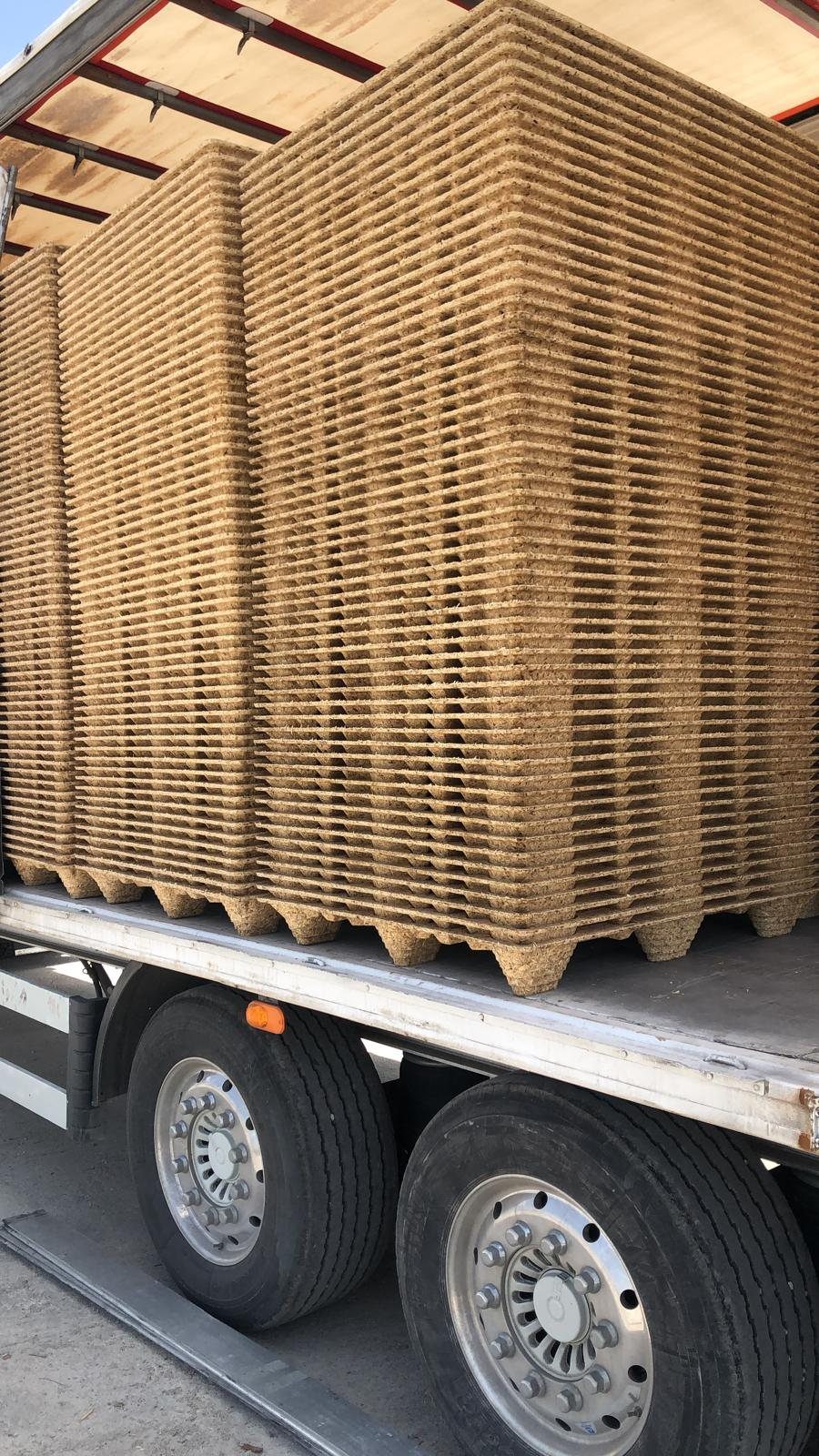
High load capacity
Engine blocks, shafts, glass and metal parts are heavy and dense. The pallet must safely carry both static (stacked) and dynamic (in motion) loads. The composite pallet offers high load capacity with reinforced base options; it does not flex under heavy load and keeps its balance.
Dimensional stability and KLT compatibility
In automotive, parts are often carried in standard boxes (KLT/GLT) and stacked on the pallet. The pallet size must be the same every time; otherwise box stacks shift and automated systems error. The composite pallet does not swell or shrink with moisture; every pallet is identical, guaranteeing box and conveyor compatibility.
Automation and line safety
Robotic lines, conveyors and automated warehouses require consistent size and a flat surface. The splinter-free, nail-free surface of a composite pallet improves operator safety and does not snag on sensor/reader systems. This reduces line stoppages and scrap rate. For sector-specific detail, see our automotive pallet page.
Automotive pallets in export
The automotive supply chain is global; parts ship across countries frequently. Wooden pallets require ISPM-15 in these shipments; composite pallets do not. Being light, it also saves freight. For size choice and a quote, see our composite pallet page.